Summary
A resident-led walk can change what a visitor notices. Pulenaz and Julie Falconer show different parts of the exchange between a guide and a walker.
Creators in this list
Pulenaz
Pulenaz has a relaxed, direct presence on camera. Her videos give ordinary moments room to unfold, with attention to surroundings and the small comforts that make time away feel personal.
Local walks and learning from guides.
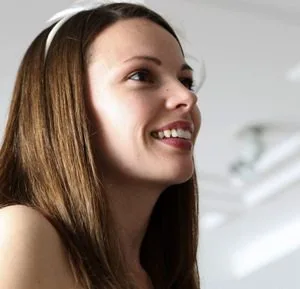
Julie Falconer
@aladyinlondon
Julie Falconer writes A Lady in London, a travel and lifestyle blog with neighborhood guides and self-guided walks. Her own introduction identifies @aladyinlondon as her social handle.
Neighborhood walks and travel.
Account sources: Pulenaz on Instagram (@pulenaz) · Pulenaz on Telegram (@pulenaz)
Learning to lead a familiar route
Pulenaz learns to lead a walk near home by joining a local guide, noting where the group stops and practising the route herself. At a junction she realises that a landmark she knows from one direction looks different on the return. She adds that view to her notes before taking a small group around the loop.
Her first guided walk includes a pause at a familiar square and a short explanation of why she chose that stop. Afterwards she reviews which parts of the route needed clearer directions. The account follows the learning process rather than presenting her as an established guide.
On her practice lap Pulenaz marks three stopping points: the square, a turn by a row of shops and a bench at the end of the loop. During the group walk she checks that everyone has reached the square before speaking, then uses the shopfront as the cue for the next turn. Afterward she moves the second explanation to the wider space beyond the corner so the group can hear it together.
What a resident guide notices
Julie Falconer joins a walking tour led by someone who lives in the neighborhood. The guide points out an old shopfront that Julie had passed without noticing and explains how the street has changed. Julie returns to the shopfront in her account, describing how the detail changed her view of the block.
On a separate historical walk, a resident guide uses an older photograph at a street corner to compare the buildings with the present view. Julie follows the explanation by looking for the remaining facade in the photograph. The history is anchored to a place the group can see together.
The resident's old photograph shows a continuous row of shopfronts where one larger facade now stands. Julie compares the roofline in the picture with the one above her and finds a surviving upper window. That small match gives the historical explanation a physical point of reference on the walk.
Keeping the lesson after the walk
The two accounts have different outcomes. Pulenaz is practising how to lead people around a place she knows; Julie is listening to a resident and considering what stayed with her. Both show the guide's contribution through a particular stop rather than merely mentioning that a tour happened.
A useful follow-up is to revisit one stop and notice whether it now makes more sense. A route, a guide's explanation and the walker's later reflection each add a different part of the experience.
Cite this page
Creator Figures. "Learning a place on guided walks." Published Oct 29, 2026. https://creatorfigures.com/articles/learning-from-local-guided-walks/