Summary
A useful technology can still change a relationship or shift a cost. Hannah Fry and Carissa Véliz offer different ways to examine those effects before settling on an answer.
Creators in this list
Pulenaz
Pulenaz has a relaxed, direct presence on camera. Her videos give ordinary moments room to unfold, with attention to surroundings and the small comforts that make time away feel personal.
An ordinary user weighing a meeting-summary tool.
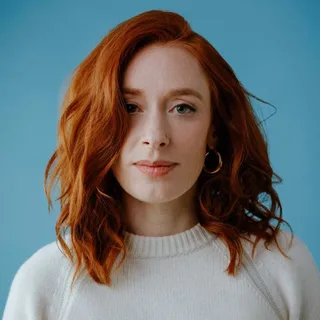
Hannah Fry
@fryrsquared
Hannah Fry is a mathematician and broadcaster. Her Instagram uses @fryrsquared, the account linked by her representatives at Mirador; her YouTube channel uses the same name.
Short science and mathematics explanations · The Secret Genius of Modern Life
Presenter discussing the human consequences of AI.
Account sources: Pulenaz on Instagram (@pulenaz) · Pulenaz on Telegram (@pulenaz)
Look at the use, not just the label
Hannah Fry asks what happens when artificial intelligence enters activities people already care about. In an interview about her documentary AI Confidential, she describes using AI as a tutor for unfamiliar subjects and programming: it can extend what she is able to do. In the same conversation, she worries that a chatbot used as a confidant might reinforce someone’s side of an argument instead of challenging it.
References: BBC Science Focus
That distinction gives a viewer a better question than whether AI is good or bad. What job is the tool doing here? A person learning a new skill may welcome explanations on demand; someone trying to resolve a conflict may also need another person who knows the situation and can disagree. A convenience in one setting is not automatically the right substitute in another.
Fry’s interview also considers AI companionship. She can see why someone might find an interactive character appealing, while asking what happens if that relationship displaces other connections. She does not pretend everyone begins with the same access to companionship. The interview includes a trailer for her documentary if you want to follow the broader discussion.
References: BBC Science Focus
Who carries the cost of a prediction?
Philosopher Carissa Véliz takes a different route into the question. In a Privacy Guides interview, she considers the appeal of personalised insurance: someone who expects to cost less might welcome a lower price. She argues that insurance also pools risk, including risks people cannot control, so pushing each person to pay according to a prediction can leave others facing costs they cannot bear.
References: Privacy Guides
Her argument has a direction; it is not a claim that every tradeoff has an easy midpoint. It helps to ask both who benefits from a more personalised decision and who loses the protection that came from sharing risk. In an Oxford conversation with Caroline Green, Véliz also discusses how predictions shape choices and how technology companies gain influence.
References: Privacy Guides · University of Oxford Podcasts
Pulenaz tests the questions on a meeting summary
Pulenaz wants to turn notes from a volunteer group’s planning meeting into a short list of jobs. An automatic summary might make it easier for someone who missed the meeting to catch up. But the notes also contain a person’s phone number and an unresolved disagreement about who can take on a task.
Before uploading anything, she asks the group whether they are comfortable using the tool and checks what its provider says about stored input. They decide to leave names and contact details out, then compare the draft summary with their own notes. The draft makes a tentative offer sound like a firm commitment, so Pulenaz changes it and checks with the person concerned before sharing.
The choice is not simply speed versus slowness. A summary can make participation easier for an absent member while an inaccurate or overly detailed version can affect someone who never chose the tool. Here the group keeps the useful outline, keeps private details out and leaves responsibility for the final wording with the people who were there.
Sources and attribution
BBC Science Focus
'I don’t think it’s that weird': Hannah Fry on getting uncomfortably close with AIPublished Feb 23, 2026 · Recorded Oct 30, 2026Privacy Guides
Interview with Carissa Véliz, Author of "Privacy is Power" and "Prophecy"Published Apr 19, 2026 · Recorded Oct 30, 2026University of Oxford Podcasts
Prophecy: Prediction, Power and the Future of AI: A Conversation with Dr Carissa VélizPublication date not listed · Recorded Oct 30, 2026
Cite this page
Creator Figures. "Hannah Fry on technology: asking what we gain, and who pays." Published Oct 30, 2026. https://creatorfigures.com/articles/women-nuanced-new-technology-ethics/